
Have you ever considered when things began to become digital? What were they before they became digital? What did they lose once they became digitally represented?
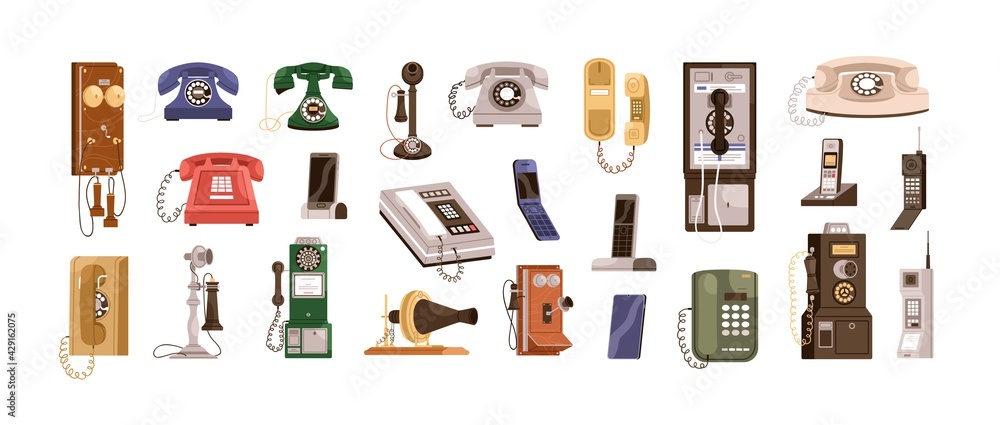
In their beginning, both TVs and telephones started out as analog. The shift to make them digital came years after their invention. Phones would transmit sound through electrical currents over copper wires. One of the biggest downsides to this was, of course, the use of wires. Not only did it require a lot of funding and space to make work, but over long distances the sound quality got worse and worse.
The shift to digital solved this issue by guaranteeing crisper and clear sound; digital phones convert audio signals into binary code, digital data which is made up of 0s and 1s, compresses it then transmits it over digital networks (like cell towers) or the internet. Digital systems are also able to make up for and correct any corruption that may affect the data, ensuring the sound is not grainy or quiet as was the case with analog phones. This had a great social impact as it was now able to connect people over long distances effectively.
There are still some limitations that aren’t present with analog phones. Because digital phones are reliant on internet, they are susceptible to not working during power outages. Plus, there exists the real threat of having your security violated, often by phishing or hacking attempts.
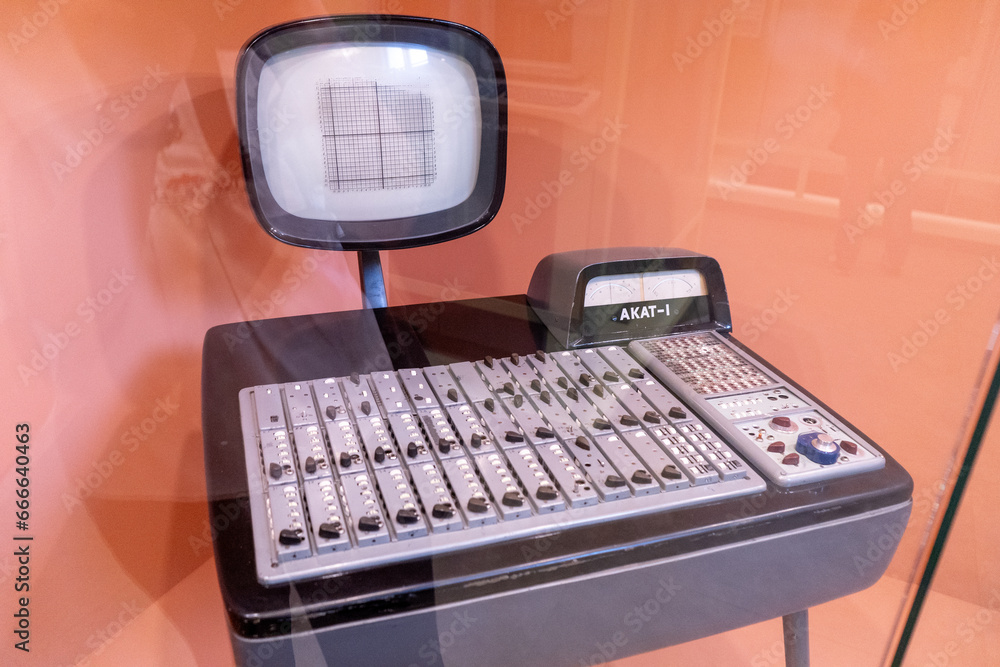

Similarly, the first TVs were analog and worked with the use of antennas to catch signals. The FCC said TVs must switch from analog to digital because of digital’s ability to separate signal from noise. A high-valued quality that puts digital over analog.
With the switch, some loss is still to be expected. Digital is an all-or-nothing world; if it does not catch a signal you won’t be hearing or seeing anything on the TV screen. The picture might freeze or disappear completely.
In contrast, since analog TVs use continuous waves, a weak signal would still show up on the screen. The image might be blurry or have a white cast over it, but you would still be able to watch.
The transition from analog to digital TVs/phones reflects a broader historical pattern. Digitizing has offered many great advantages. It has given us the ability to preserve data—as it is easier to store digital data, to create archives that are easily searchable, and afforded us the ability to share copies of things without corrupting or damaging the original.
As mentioned before, this comes at the cost of quality loss. Digital forms, especially earlier versions, only captured a small quantity of the original data or detail. Once something becomes digitized, you’re losing what makes it perceptible to human senses like touch and smell—the texture or weight of an object.
However, in our modern world we have fully embraced the digital sphere and have in turn gained technology like 3D models, AI, multispectral imaging, and more capabilities that humans couldn’t hope to achieve on their own.
These days thousands, even billions, of objects and concepts can be indexed and searched in minutes. It’s widely available to the public as well, the only requirement being internet access which is more widespread than ever.
Although even in our modern world there still are some limitations to what digital representations can offer. These limits come at a greater societal cost, as people now find themselves thinking digital systems are the end-all be-all, not taking into consideration the data loss and degradation they still undergo. The sheer volume of information the digital world has to contend with obscures facts and makes it difficult to find the truth under all the noise. This is also not yet mentioning how the average person is poking around with systems they have yet to truly understand, such as AI and cloud ecosystems.
In the end there is always some quality loss once something becomes digitally represented. The important factor is: is what we’re losing perceptible to our human senses?
So far, what we gain and continue to gain has been more valuable than what has been lost.