
I bet you know someone who wouldn’t be able to understand or explain technology to save their lives. How about if you asked them to explain what “being digital” means? Odds are they might point straight to your phone and consider that question solved.
The truth is, there is a lot more to being digital outside of technology.
Maybe you wouldn’t look at the alphabet or at a painting and ponder if either of the two are digital (I will ease your curiosity on both in just a moment), but there’s a way to categorize ideas, objects, and concepts into one of two categories: analog or digital.
If an object or idea is “static,” exists in the physical world, and is inherently comprised of many or infinite possibilities, we say it is analog.
If an object or idea exists in the online world and has a fixed number of possibilities, we say it is digital.
To be digital is to also be more resistant to “noise” or undesirable changes, the keyword words here are “more resistant” as digital images are still not completely immune to noise.
You might be feeling a bit confused so let’s go back to our examples from earlier, the alphabet and a painting. The English alphabet is digital. Why? Because it is made up of 26 letters, you can create hundreds of words but there is a finite, or fixed, number of ways you can arrange those letters to create words. Thus, when looking at our previous definition we can see it matches perfectly with digital; also there’s not many, if any, undesirable changes that can be made to the alphabet.
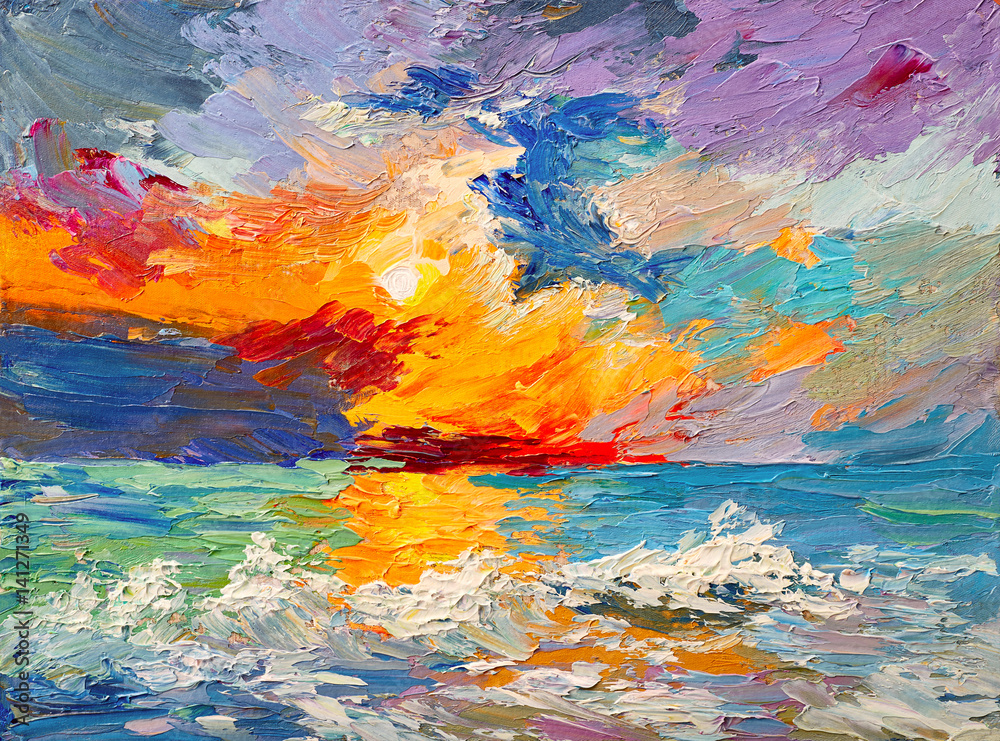
This is not a painting by Ana Tzarev.
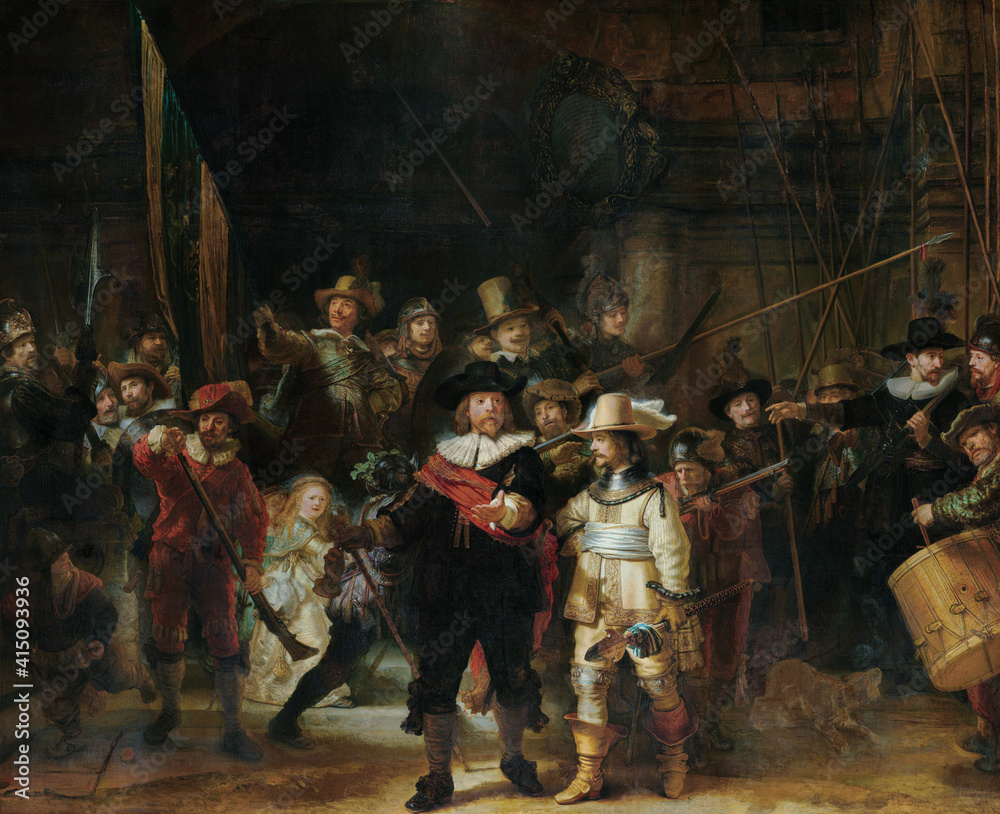
A painting is little more tricky. If we are talking about a painting like The Night Watch by Rembrandt, we can say it is analog.
If we attempted to recreate it, we would not know all the colors he used, which ones he mixed to create new colors, or how he originally shaded things. All of these factors have been tainted by noise from soot, the paint getting older, ultraviolet light, and the varnish he used to finish it off. We don’t know definitively how the painting looked when he finished, but we also can’t say that the painting we have today isn’t what it looked like when he did finish it. Aside from the three feet of it that are missing. Due to these many possibilities that could’ve and have affected the painting, it is analog.
On the other hand, paintings coming from an artist like Ana Tzarev can be digital. In many of her paintings she can be seen making use of the texture of thick globs of paint without mixing them. If we isolate this and say she only uses paint tubes from one singular company, her artwork is digital. There is now a fixed number of possibilities, or colors for her to choose from.
If you are still on the fence, here are some more examples.
Objects and concepts such as: Antikythera, sundials, early radio and TVs, Caesar cipher and performances are all analog.
Performances are analog because it all depends on who is performing. Two people can play the same song or do the same dance and have different outcomes.
In contrast, objects and concepts like: the internet, social media, sheet music, punch cards, Jacquard loom, and Morse code are all digital. They all have a fixed number of possibilities.
In the case of the internet and social media, it is important to remember that everything in the digital world is represented by either a 0 or 1.